Rain Garden Fix for Drainage, Access and Inviting Backyard

Priorities: Ecological Drainage – Accessibility – Low-Maintenance Landscape
Challenges: Misgraded Runoff – Limited Foot Traffic – Turf Berms
Solutions: Rain Garden Swales – Limestone Walkways – Turf Removal and Native Plantings

This residential landscape project solved long-standing drainage issues while transforming both the front and back yards into accessible, low-maintenance outdoor living spaces.

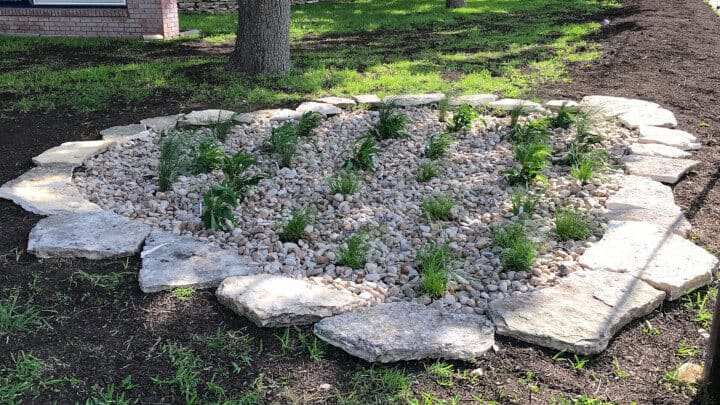
In the front yard, improper grading caused rainwater to backflow onto the driveway and pool in pedestrian areas during storms. An adjacent lawn berm prevented drainage, limiting safe foot traffic—especially for the homeowners’ aging parents. Maas Verde removed the existing concrete sidewalk, regraded the site toward a central collection area, and installed a wider sidewalk and expanded patio using sawed limestone slabs to improve circulation and usability.
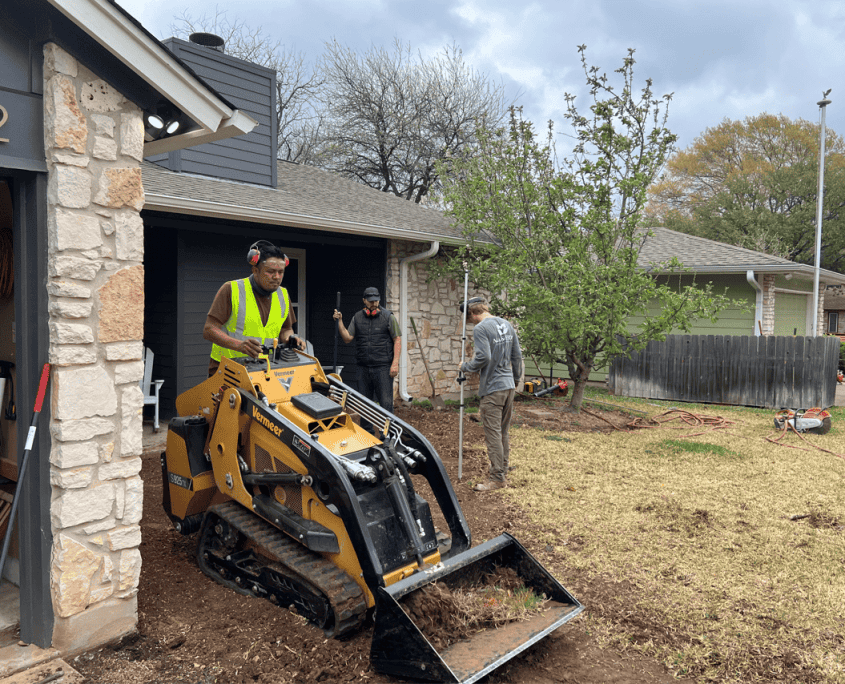
To manage stormwater ecologically, the grass berm was removed and replaced with a 200-square-foot rain garden swale designed to capture runoff from surrounding stonework and impervious surfaces. During a one-inch rain event, the system can capture approximately 540 gallons of runoff and hold up to 990 gallons in total capacity. More than 650 square feet of St. Augustine turfgrass were removed in the process and replaced with a diverse planting of 317 native plants representing 12 species, helping absorb moisture while creating a resilient, water-wise landscape.

Eighteen months after installation, the rain garden has matured into a thriving native habitat. Maintained using only rainfall and Stage 2 irrigation restrictions (one day per week), the space now supports hummingbirds, bumble bees, and even occasional wildlife visitors like a fox.
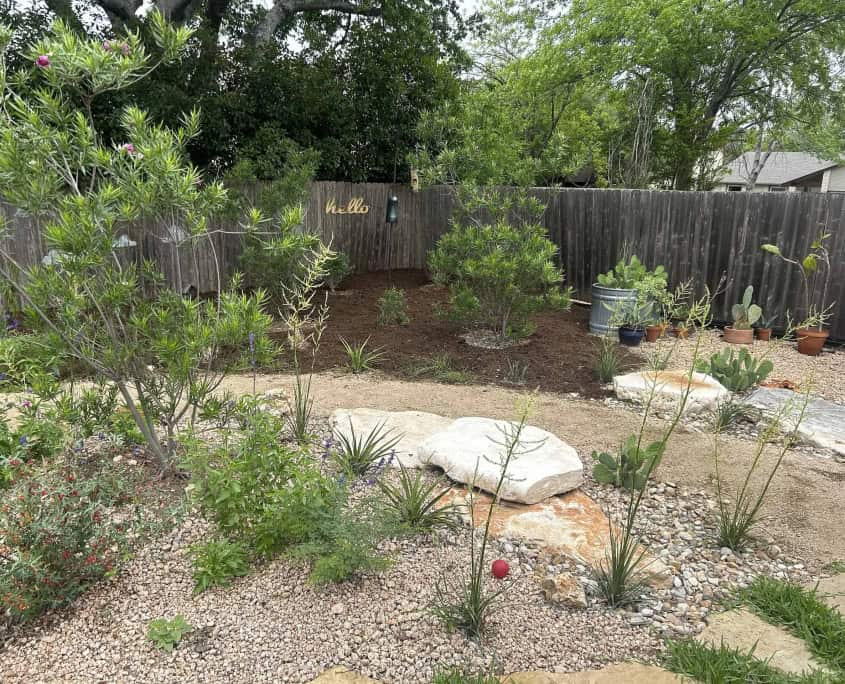
In the backyard, the goal was to create an inviting, low-maintenance gathering space as an alternative to a high-input lawn. Maas Verde removed an additional 2,700 square feet of St. Augustine turfgrass and replaced it with a gravel walking path that connects multiple garden sanctuaries. The existing concrete porch was extended and resurfaced with 2-inch-thick cut limestone, creating a functional outdoor living and grilling area.
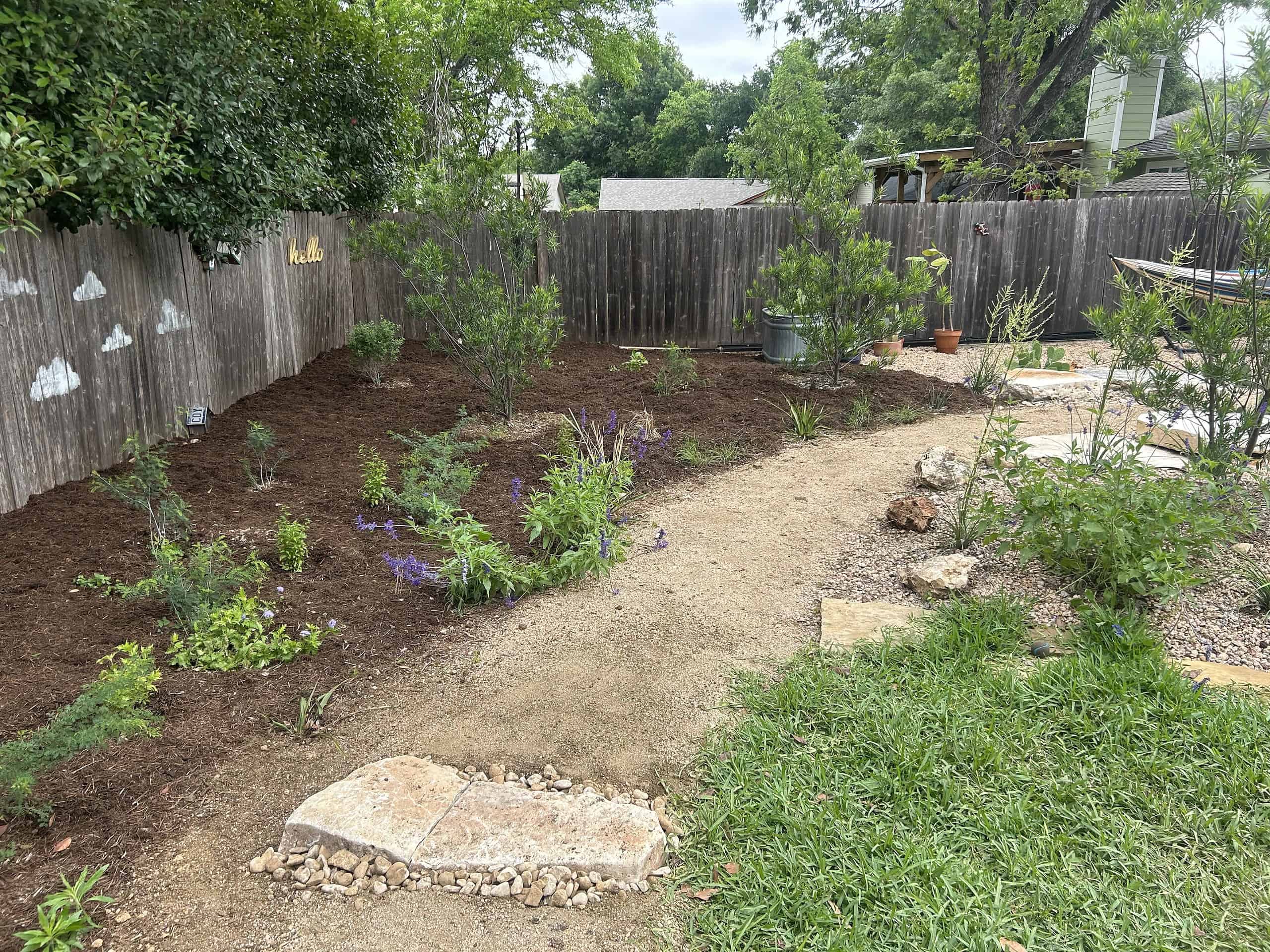
The backyard plant palette includes 26 native species, alongside features such as stacked pancake boulders, cream limestone slabs, a Desert willow, wildflower meadow, and succulent garden. Together, the front and back yard improvements form a cohesive landscape that prioritizes ecological performance, accessibility, and year-round enjoyment.
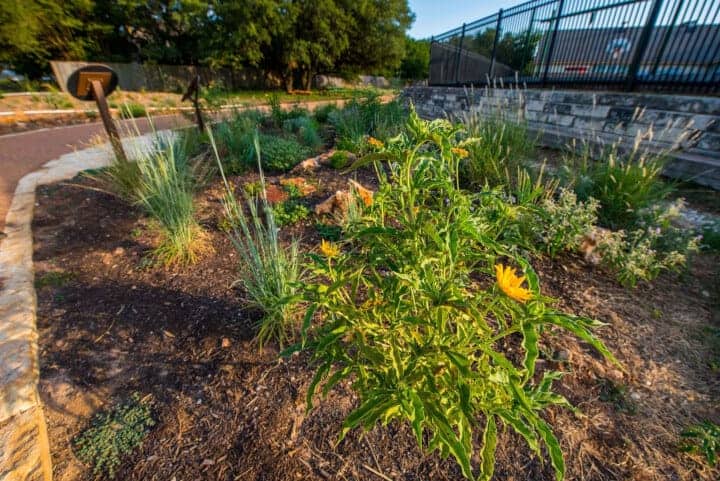
Hill Country Conservancy Violet Crown Trail Butterfly Garden

Priorities: Ecological Restoration – Native Habitat Creation – Trail System Support
Challenges: Disturbed Construction Soils – Establishing Vegetation in a Public Corridor
Solutions: Soil Decompaction and Amendment – Native Seeding – Temporary Irrigation System

The Violet Crown Trail is a first-of-its-kind regional trail system in Central Texas, connecting Zilker Park to the Lady Bird Johnson Wildflower Center across 13 miles, with long-term plans to extend the trail to Hays County. During trail construction, Maas Verde was engaged as a subcontractor to restore an area previously used for construction staging.

The scope of work focused on rehabilitating heavily compacted soils by decompacting and amending the site to support healthy plant growth. A native seed mix was installed to reestablish vegetation and stabilize the disturbed area while aligning with the surrounding ecology.

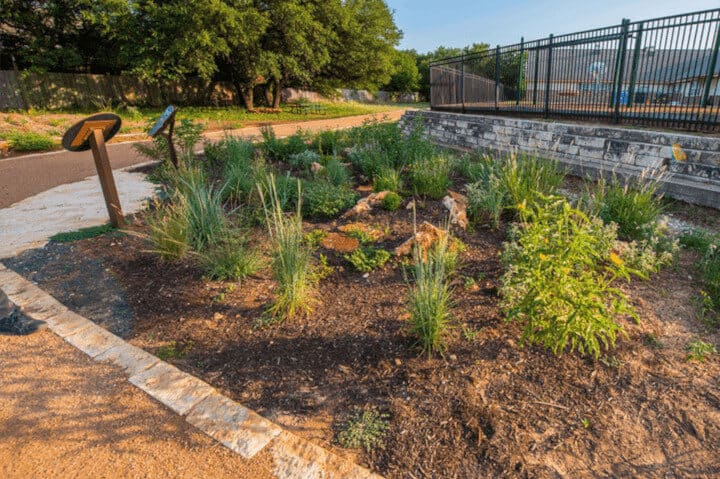
In addition to seeding, Maas Verde designed and installed a butterfly garden using native plants and boulders to create habitat within the trail corridor. A temporary above-ground irrigation system was installed to support plant and seed establishment, supplied by a 600-gallon water drum. The system required precise calculations to ensure adequate water distribution while remaining flexible for eventual removal.

This restoration effort demonstrates how ecological design and construction can successfully repair disturbed landscapes and enhance public trail environments.


Brentwood Austin Residential Landscape Design

Priorities: Functional Irrigation – Cohesive Landscape Design – Shade and Screening
Challenges: Inadequate Water Pressure – Integrating New and Existing Plantings
Solutions: Custom Irrigation System – A/C Screening and Fruit Tree Garden – Pergola Installation

This Brentwood-area Austin project combined custom landscape design, irrigation planning, and structural elements to improve both function and aesthetics across the property.

Maas Verde developed a detailed landscape plan that included a discreet screen for the home’s A/C unit and a fruit tree garden integrated into the existing landscape. A new irrigation system was designed to support both the pre-existing plantings and the new additions, ensuring consistent water coverage throughout the site.

During irrigation installation, the crew discovered severely restricted water flow caused by a significant clog in the City of Austin’s water connection. Maas Verde worked persistently with the City to diagnose and resolve the issue, ultimately restoring proper water pressure and allowing the project to move forward as designed.

Once irrigation was complete, a 10-foot-tall pergola constructed with 6″ × 6″ posts was installed to anchor the space and enhance usability. The completed project delivers a cohesive landscape that balances structure, planting, and long-term performance.

Barton Hills Residential Landscape Design

Priorities: Site-Responsive Design – Stormwater Management – Native Plantings
Challenges: Onsite Design Constraints – Integrating Existing Natural Features
Solutions: Graded Gravel Walkways – Limestone Masonry Borders – Native Landscape Installation

This residential project in the Barton Hills neighborhood of Austin was shaped through close collaboration between the client and the Maas Verde design team. Working dynamically and designing onsite, the team ensured the landscape responded directly to existing conditions and preserved the site’s natural character.

Masonry was used to construct gravel walkways bordered by artistic limestone rockwork and native plantings. These walkways were intentionally designed to function as stormwater outlets, making precise grading a critical component of the project. By integrating drainage into the circulation paths, the landscape manages runoff naturally while enhancing usability and visual interest.

The result is a highly site-specific landscape that demonstrates how trust and collaboration between client and designer can lead to a cohesive, functional, and ecologically responsive outdoor space.

Prescribed Burn for Land Management

Priorities: Ecological Land Management – Native Species Support – Fire Safety
Challenges: Weather-Dependent Conditions – Risk Management and Coordination
Solutions: Prescribed Burn Planning – On-Site Safety Protocols – Controlled Ignition and Monitoring

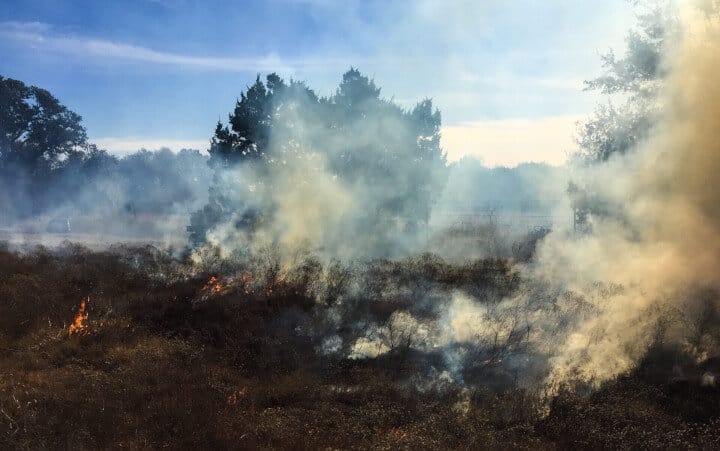
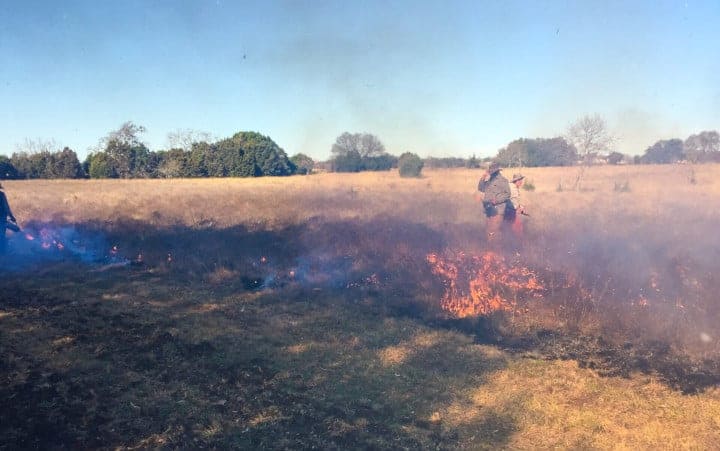
Maas Verde Landscape Restoration was engaged to safely execute a prescribed burn on a Central Texas property as part of an ongoing land management strategy. The controlled burn reduced accumulated dead biomass, limited competition from non-native species, increased soil exposure to sunlight, and helped control the spread of Ashe juniper (Juniperus ashei), creating conditions favorable for native plant regeneration.

Because prescribed burns depend on precise weather and humidity conditions, careful planning and scheduling were essential. Before ignition, the Maas Verde team conducted a comprehensive safety and procedures meeting, then divided into coordinated crews using radios to maintain constant communication across the site.

During the burn, drip torches were used to establish burn lines while two ATVs equipped with water tanks and sprayers supported fire control efforts. A dedicated crew monitored and mowed firebreaks to ensure the fire remained contained at all times. This client participates in prescribed burns on a 24-month cycle, supporting long-term, sustainable land stewardship.

San Gabriel Unitarian Universalist Fellowship

Priorities: Accessible Circulation – Stormwater Management – Durable Outdoor Space
Challenges: Flood-Prone Site – Off-Site Runoff – Precise Grade Transitions
Solutions: ADA-Compliant Sidewalk and Ramp – High-Capacity French Drain – Rain Gardens and Custom Drain Box

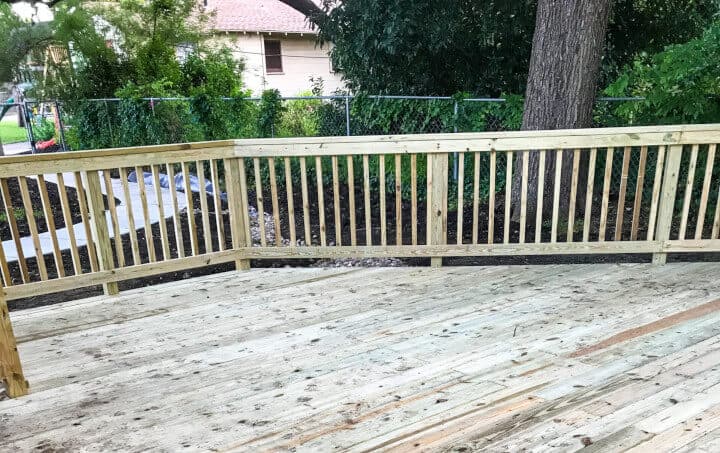
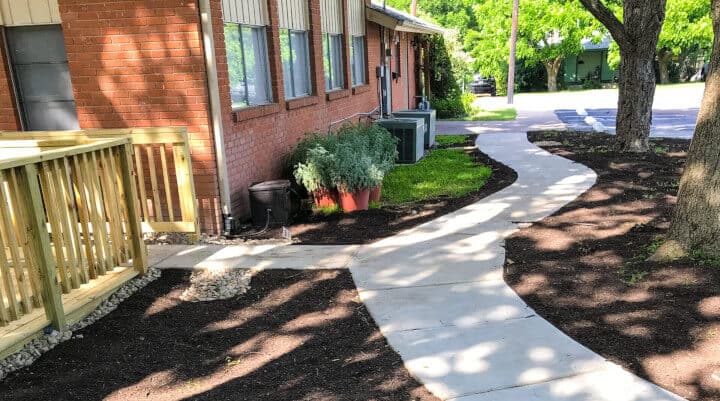
Located near historic Old Town in Georgetown, Texas, San Gabriel UU Fellowship serves a diverse community and prioritizes accessibility for people of all ages and mobility levels. Maas Verde Landscape Restoration was engaged to construct a new concrete sidewalk, a large deck, and a comprehensive stormwater management system that aligned with the fellowship’s inclusive values.


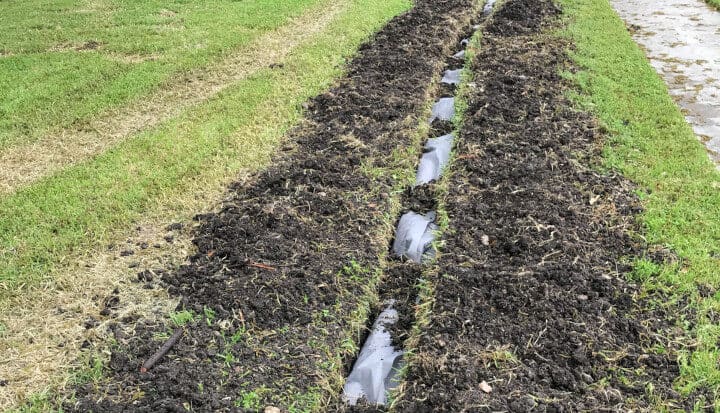
The site presented significant drainage challenges, including heavy runoff from two off-site church parking lots that routinely flooded the construction area during rain events. To address this, Maas Verde fabricated a custom 24-inch³ concrete drain box off-site capable of handling large volumes of stormwater. A high-capacity French drain system was designed and installed to move water efficiently through the site.

Downstream of the deck, Maas Verde constructed two rain gardens to slow, capture, and absorb runoff at multiple points, reducing pressure on the drainage system while allowing water to infiltrate naturally into the soil. Careful grading ensured the deck and sidewalk aligned seamlessly, meeting ADA requirements and incorporating a ramp to provide safe, comfortable access for all visitors.

By mitigating impervious surfaces and integrating natural stormwater catchment areas, this project balances durable construction with ecological design, delivering a functional and inclusive outdoor environment.


Pease Park Retaining Wall

Priorities: Public Safety – Long-Term Durability – Urban Park Stewardship
Challenges: Construction in an Active Public Space – Adjacent Roadway Conditions
Solutions: Reinforced Retaining Wall – Anchored CMU Base – Limestone Finish

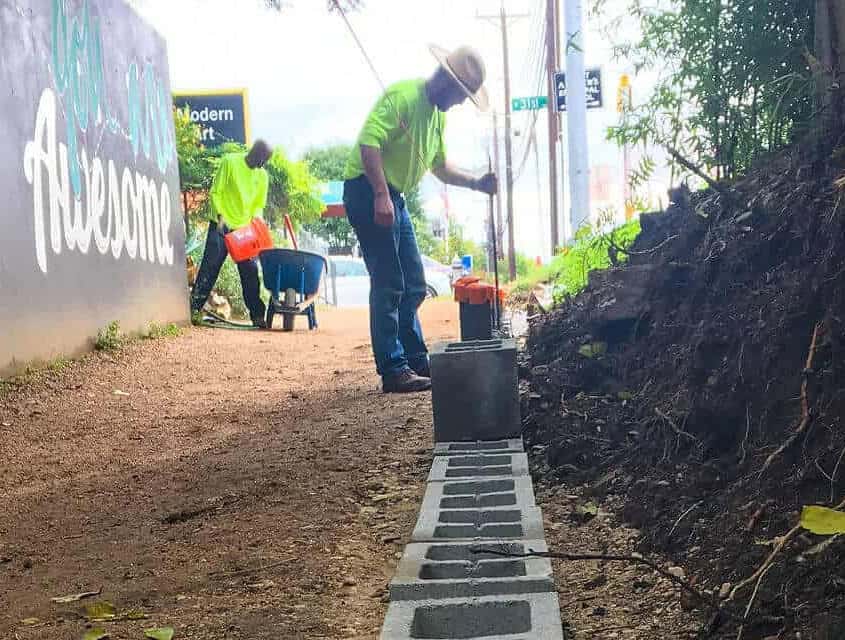
Pease Park Conservancy’s vision for Pease Park centers on accessibility, environmental innovation, and inclusive public space. In support of that mission, Maas Verde Landscape Restoration was engaged to construct a retaining wall adjacent to North Lamar Boulevard, where safety, durability, and public visibility were critical considerations.

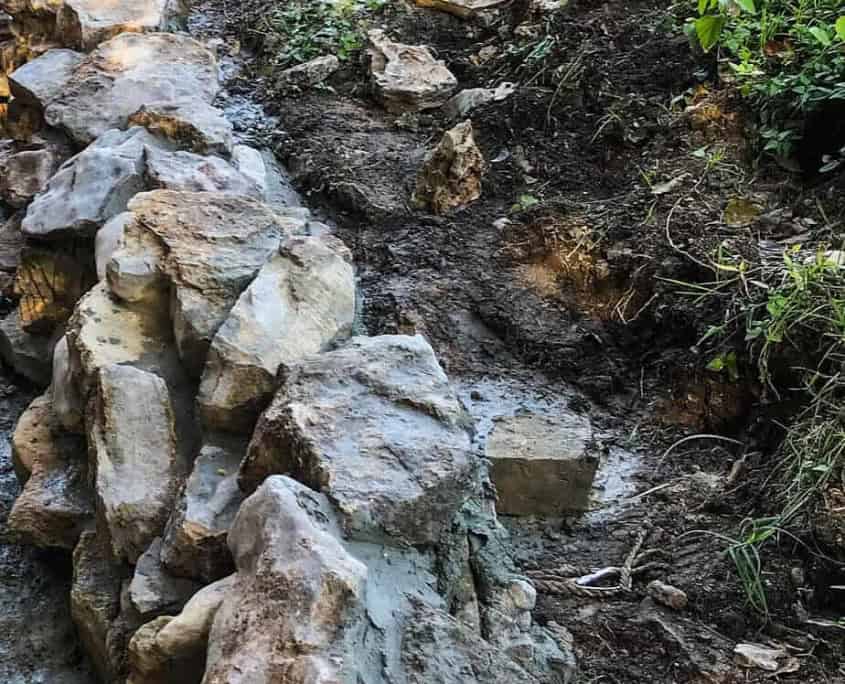
Because construction took place within an active urban park, the project required careful coordination to ensure the safety of both park visitors and crew members. The retaining wall was built using anchored cinderblocks as a structural base, reinforced with rebar, and finished with natural limestone to blend seamlessly into the park’s landscape.

Maas Verde worked closely with stakeholders from the Pease Park Conservancy and the City of Austin throughout the process, delivering a solution that balances structural integrity with the park’s natural character. The completed wall supports land stewardship efforts while enhancing safety and resilience along a highly trafficked edge of the park.