
Rain Garden Fix for Drainage, Access and Inviting Backyard

Priorities: Ecological Drainage – Accessibility – Low-Maintenance Landscape
Challenges: Misgraded Runoff – Limited Foot Traffic – Turf Berms
Solutions: Rain Garden Swales – Limestone Walkways – Turf Removal and Native Plantings

This residential landscape project solved long-standing drainage issues while transforming both the front and back yards into accessible, low-maintenance outdoor living spaces.

In the front yard, improper grading caused rainwater to backflow onto the driveway and pool in pedestrian areas during storms. An adjacent lawn berm prevented drainage, limiting safe foot traffic—especially for the homeowners’ aging parents. Maas Verde removed the existing concrete sidewalk, regraded the site toward a central collection area, and installed a wider sidewalk and expanded patio using sawed limestone slabs to improve circulation and usability.
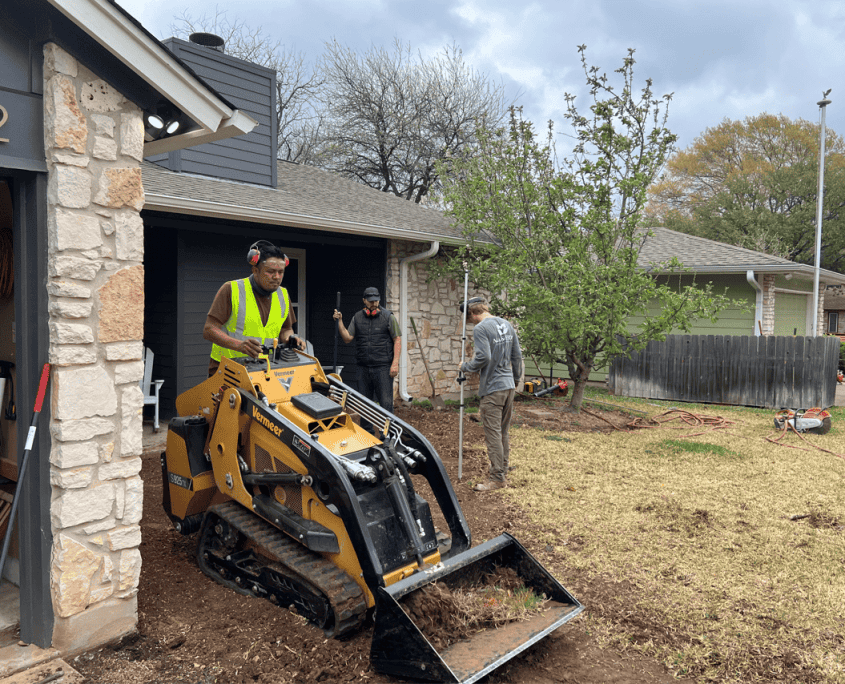
To manage stormwater ecologically, the grass berm was removed and replaced with a 200-square-foot rain garden swale designed to capture runoff from surrounding stonework and impervious surfaces. During a one-inch rain event, the system can capture approximately 540 gallons of runoff and hold up to 990 gallons in total capacity. More than 650 square feet of St. Augustine turfgrass were removed in the process and replaced with a diverse planting of 317 native plants representing 12 species, helping absorb moisture while creating a resilient, water-wise landscape.

Eighteen months after installation, the rain garden has matured into a thriving native habitat. Maintained using only rainfall and Stage 2 irrigation restrictions (one day per week), the space now supports hummingbirds, bumble bees, and even occasional wildlife visitors like a fox.
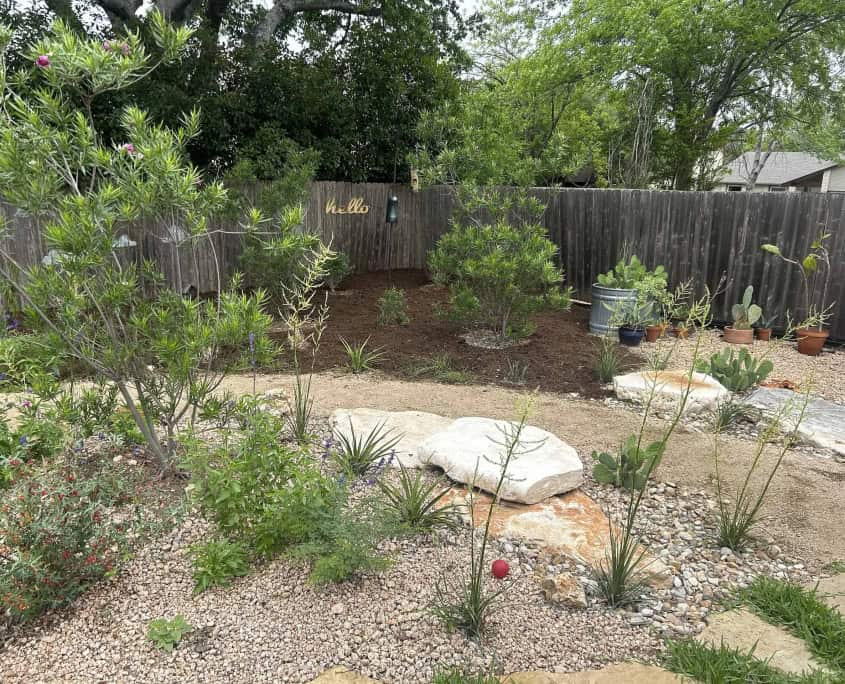
In the backyard, the goal was to create an inviting, low-maintenance gathering space as an alternative to a high-input lawn. Maas Verde removed an additional 2,700 square feet of St. Augustine turfgrass and replaced it with a gravel walking path that connects multiple garden sanctuaries. The existing concrete porch was extended and resurfaced with 2-inch-thick cut limestone, creating a functional outdoor living and grilling area.
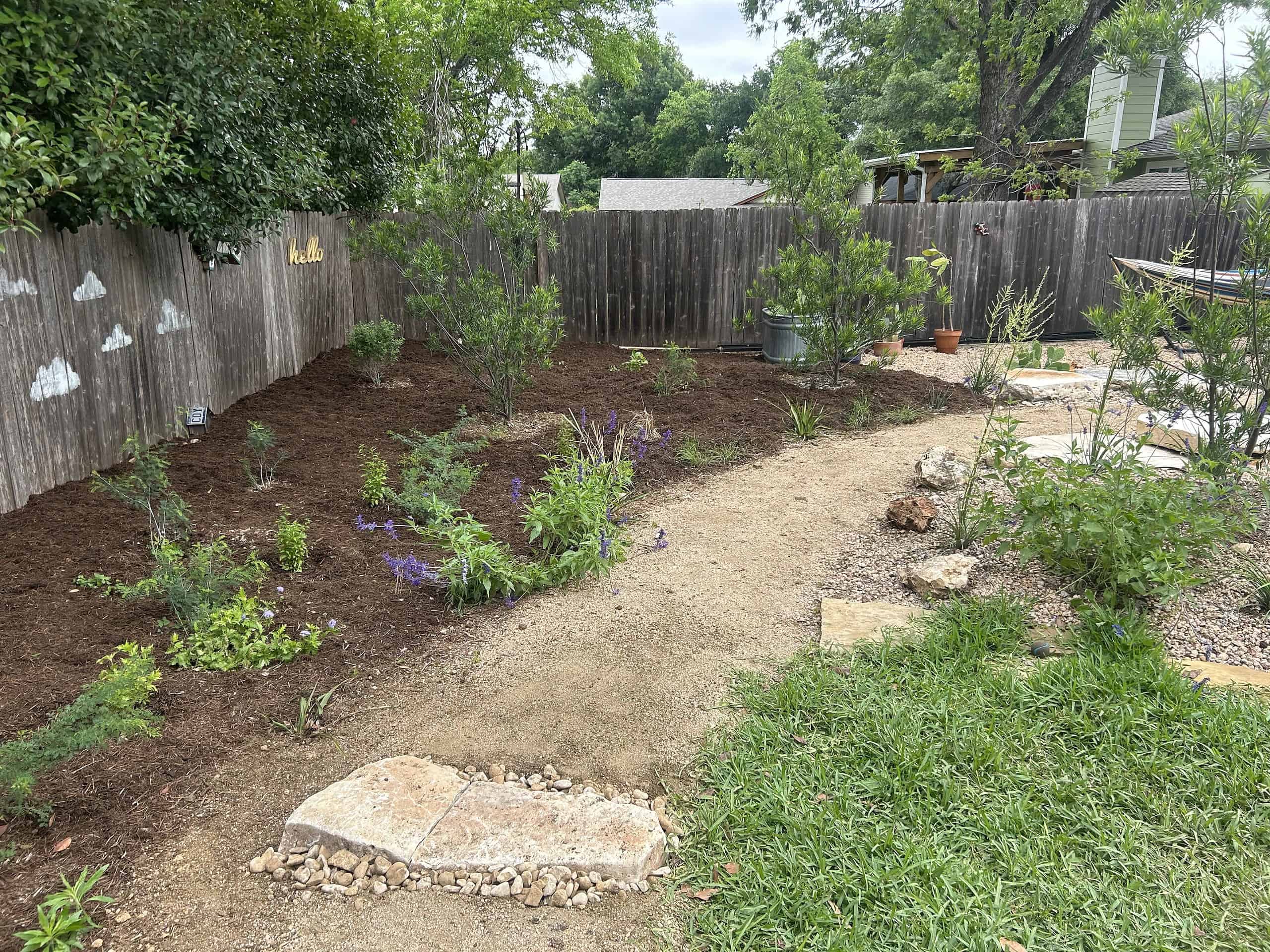
The backyard plant palette includes 26 native species, alongside features such as stacked pancake boulders, cream limestone slabs, a Desert willow, wildflower meadow, and succulent garden. Together, the front and back yard improvements form a cohesive landscape that prioritizes ecological performance, accessibility, and year-round enjoyment.

Brentwood Austin Residential Landscape Design

Priorities: Functional Irrigation – Cohesive Landscape Design – Shade and Screening
Challenges: Inadequate Water Pressure – Integrating New and Existing Plantings
Solutions: Custom Irrigation System – A/C Screening and Fruit Tree Garden – Pergola Installation

This Brentwood-area Austin project combined custom landscape design, irrigation planning, and structural elements to improve both function and aesthetics across the property.

Maas Verde developed a detailed landscape plan that included a discreet screen for the home’s A/C unit and a fruit tree garden integrated into the existing landscape. A new irrigation system was designed to support both the pre-existing plantings and the new additions, ensuring consistent water coverage throughout the site.

During irrigation installation, the crew discovered severely restricted water flow caused by a significant clog in the City of Austin’s water connection. Maas Verde worked persistently with the City to diagnose and resolve the issue, ultimately restoring proper water pressure and allowing the project to move forward as designed.

Once irrigation was complete, a 10-foot-tall pergola constructed with 6″ × 6″ posts was installed to anchor the space and enhance usability. The completed project delivers a cohesive landscape that balances structure, planting, and long-term performance.

Barton Hills Residential Landscape Design

Priorities: Site-Responsive Design – Stormwater Management – Native Plantings
Challenges: Onsite Design Constraints – Integrating Existing Natural Features
Solutions: Graded Gravel Walkways – Limestone Masonry Borders – Native Landscape Installation

This residential project in the Barton Hills neighborhood of Austin was shaped through close collaboration between the client and the Maas Verde design team. Working dynamically and designing onsite, the team ensured the landscape responded directly to existing conditions and preserved the site’s natural character.

Masonry was used to construct gravel walkways bordered by artistic limestone rockwork and native plantings. These walkways were intentionally designed to function as stormwater outlets, making precise grading a critical component of the project. By integrating drainage into the circulation paths, the landscape manages runoff naturally while enhancing usability and visual interest.

The result is a highly site-specific landscape that demonstrates how trust and collaboration between client and designer can lead to a cohesive, functional, and ecologically responsive outdoor space.