Tips For Winterizing a Garden in Central Texas

Tips For Winterizing a Garden in Central Texas

Temperatures have finally dropped (maybe for good), and there’s one thing on every Texas cultivator’s mind: winterizing the garden.

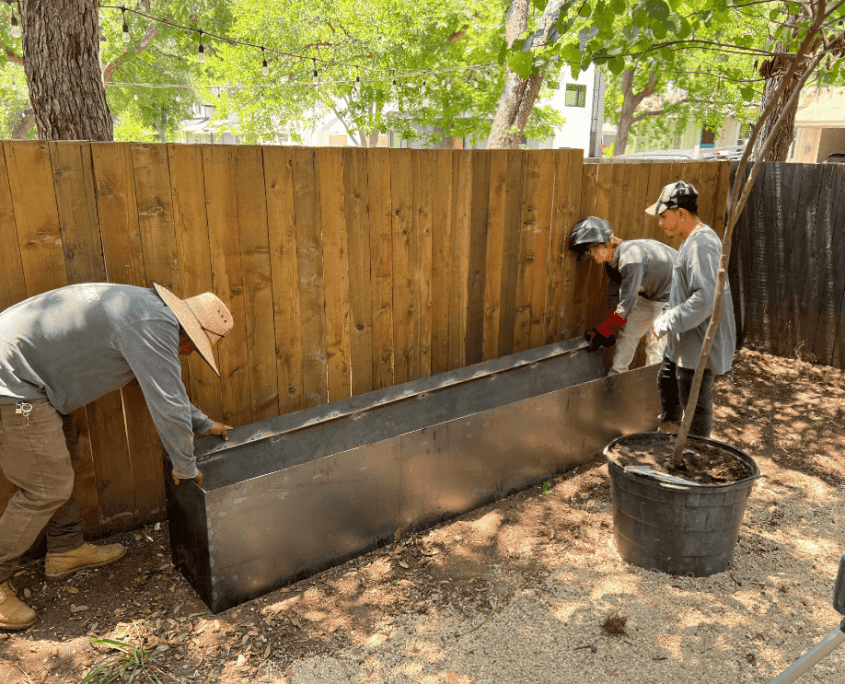
Whether you’re a homeowner with landscape shrubs, an avid gardener with colorful flower beds, or a farm-to-table vegetable grower using steel planter boxes, you know how important it is to prep your plants for winter.

There’s plenty you can do to help. Winter is a key season in any plant’s growth cycle, and there are benefits available. In fact, most plants will do some of the work themselves.

Check out this list of our favorite tips and tricks to help your plants not only succeed, but thrive through winter in Texas.

1. Water Deeply Before a Freeze

It might be counterintuitive, but watering plants before a freeze actually helps roots stay warm. Soil is a natural insulator — it changes temperature more slowly than air. And wet soil cools even more slowly.

“Water loses its heat slowly over the hours into the colder temperatures,” Texas A&M AgriLife advised. “Watering just before the freeze can help by creating warmth.”
2. Add Mulch or Leaf Litter To Boost Insulation

Have you ever stopped to wonder how even small plants can survive weeks of bitter-cold temperatures? While the above-ground structures of species like woody natives are especially resilient, it’s what happens inside the soil that counts.

The best way to protect that functionality: mulching.

Soil is an excellent insulator. In Texas’ tumultuous climate, that’s a key to any native plant’s survivability.

Consider those weeks when daytime temperatures swing between 40 and 75 degrees. Even in a cold front that lingers for a few days, the soil can retain a lot of ambient heat.

That’s like a jacket for plants.

“During these big swings, soil will typically stay closer to an average temperature,” Opperman said. “Just because air temperature drops, that doesn’t mean the depth where these plants have roots is going to be that cold.”

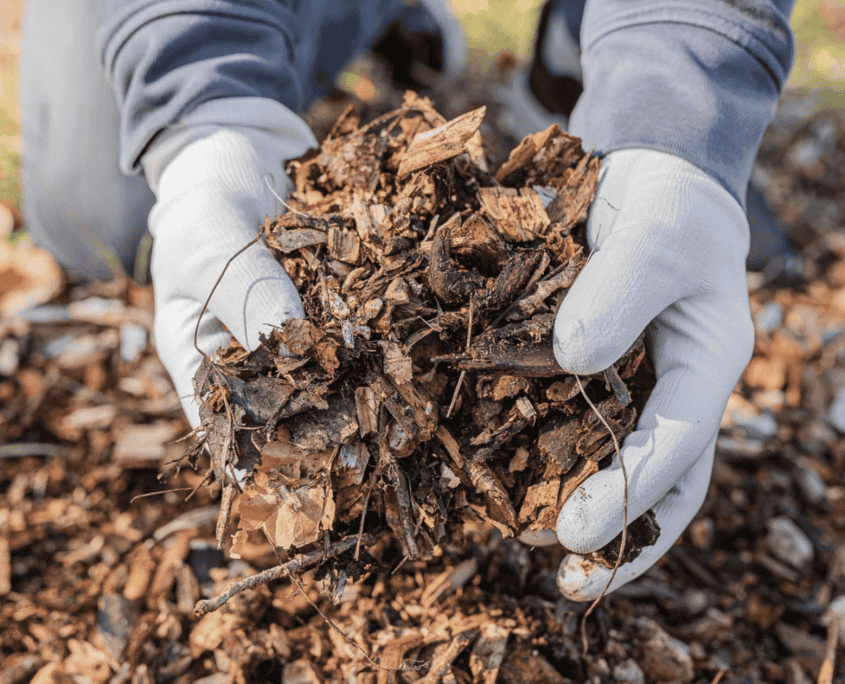
Maas Verde recommends sprinkling fresh mulch or leaf litter on garden beds ahead of the coldest winter temperatures. The added material will help limit heat loss at the soil surface.
3. Choose the Right Plant Covers for Freezes

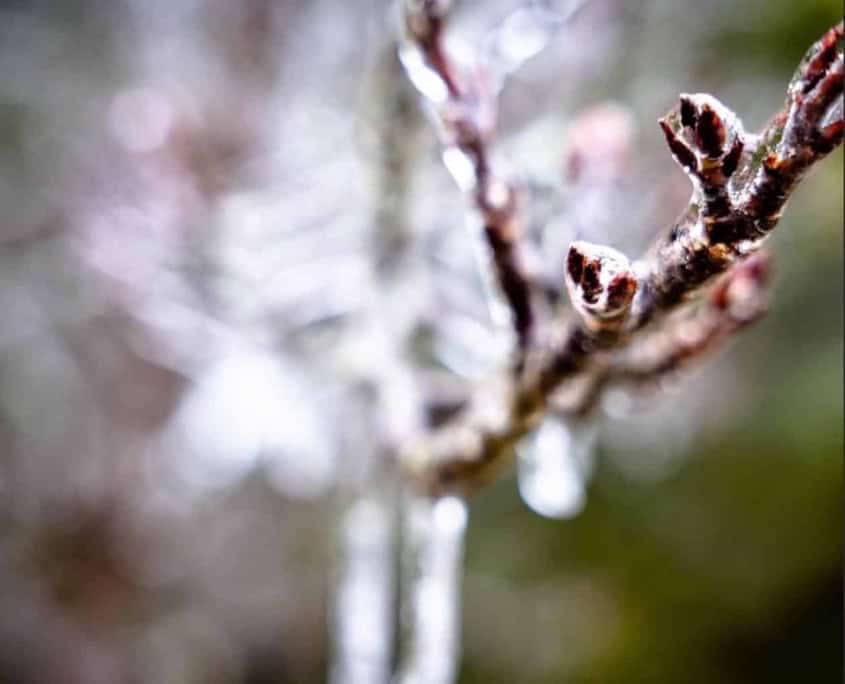
With eco-friendly planting practices, gardeners aim to create sustainable gardens that are in harmony with the local environment. However, even the most thoughtful planting cannot fully protect plants from the dangers of freezing temperatures. Freezes can shock plants when the air deposits frost on their leaves and stems, causing their cells to rupture as water inside becomes ice and expands. This can happen anytime the temperature stays low enough to freeze standing water on the ground.

While covering plants with tarps, towels, or blankets will help, it’s not ideal. Breathability, sunlight penetration, and weight are all concerns — using the right tool for the job is important.

For beds, Maas Verde recommends a medium-weight UV fabric like DeWitt’s N-Sulate. It’s purpose-engineered, reusable, and generally easy to handle.

For winterizing potted plants or trees, you can use a Planket. Essentially the same thing in a parachute shape with a drawstring closure, it tightens around plant bases or pots for convenience. Multiple sizes are available.

4. Build Your Own Plant Caddy

The “if you’re cold, they’re cold” feels — we’ve been there, too. And whether or not you’re sentimental about your plants’ comfort, sometimes a plant just needs to come inside. Young individuals with shallow roots can be especially vulnerable to extreme cold, and even bringing them inside the garage can make a difference.

Have you ever noticed how so many plant caddies are the same size and shape? Our resident gardeners know plants are the opposite of that — they come in every size and shape.

For a quick solution, get a plastic bus tub or metal galvanized tub and add casters with construction adhesive or nuts and bolts. This simple design will fit various pot sizes and keep water off your floors.
Or you could hit the same function with a different aesthetic by using a wooden craft crate. For floor protection, consider plastic bin lids or pot saucers.

5. Fertilize in Early Winter

You don’t want to fertilize too late in the season. This is because plants have the best opportunity to capitalize on any nutrient recharge when growing conditions are also ideal.

As I write this in early November, that’s exactly the case.

“Treatment right now is a great idea,” Maas Verde project manager Marc Opperman said. “With plenty of sun, warmth, and regular rain before it gets cold, it’s pretty much the best time to give your garden a boost.”

Maas Verde recommends a light layer of organic compost or granular fertilizer, such as MicroLife Multi-Purpose 6-2-4.

6. Your Plants Are Protecting Themselves!

At first glance, it might not look like much is going on with your outdoor plants in winter. But native and non-native adapted species actually spend this time deepening and developing their root systems.

The plant’s above-ground tissues are experiencing dormancy. Instead of using resources to grow leafy tissue, pollinate, or transpire, it’s sending all that energy underground.

“As roots grow, they tend to channel downward to create structure, and send these hairy rootlets out sideways,” Opperman explained. “It’s a surface area thing, and it’s especially important for nutrient uptake, mycorrhizal connection, and all kinds of good stuff.”

In temperatures of about 40 degrees and above, this is how native plants “winterize” themselves. By spring, they’ll be even better prepared to capitalize and grow.
Why Fall is the Perfect Texas Growing Season

Why Fall is the Perfect Texas Growing Season

Planting a garden or landscape in fall could raise some eyebrows.

But good reasons to do it are not hard to identify from casual observation. Here in this unheralded but productive Texas growing season, native and non-native adapted species roar into activity with colorful blooms and torrents of seeds.

The reasons why are technical but intuitive.

In October 2023, significant rains finally broke months of drought stress. The water signaled plants that had eked through the summer in dormancy to take advantage and pollinate.

The same mechanism gets triggered when Texas’ soaring summer temperatures subside. Since plants cool themselves through transpiration, or releasing moisture through their leaves, extreme heat and drought are a tough one-two punch.

Take either of those two stresses away, and you’ve got viable conditions for growing. In 2023, it all happened at once.

“Most of the species that grow here natively can handle one or two sources of stress at a time,” Maas Verde project manager Marc Opperman said. “Once they start adding up, that plant tends to have a harder time.”

He added that recent rainfall has supercharged local plant growth. At Maas Verde headquarters, recently planted seeds of multiple species have sprouted and are now advancing rapidly.

The conditions add up to an ideal time to install many Central Texas plants, especially larger specimens. Hot, dry weather doesn’t treat plants well when they’re trying to establish.

Growing demands resources. Trees and shrubs, particularly, can take more inputs to establish than smaller specimens. When the plant is getting signals to conserve moisture and nutrients in any possible way, progress can be marginal.

On the other hand, it’s a big advantage to transplant during an easier growing season, ahead of a period that induces fewer stresses. Many Central Texas natives grow best below 80 degrees, so planting them now gives them the best chance to root and thrive with proper maintenance before summer heat arrives.

“Transplanting itself does induce some stress. So with the amount of rain we’re getting right now and the better growing temperatures, it’s a great time to put plants in the ground,” Opperman said.

Spread Love for Texas Cedar Trees: A Maas Verde Challenge

Cedar fever season is right around the corner! But the tree that produces it pays us back amply with aquifer recharge and habitat restoration.

‘Greenspace’ Makes Our Lives Longer — Or Does It?

‘Greenspace’ Makes Our Lives Longer — Or Does It?

Is your neighborhood rich with parks, greenbelts, rain gardens, or other natural landscapes? If so, settle in for the long haul. Tiny structures that protect the DNA inside your cells are flourishing in an extended state of youth.

That’s the news from an interdisciplinary research group, which found that exposure to “greenspace” can lengthen telomeres and extend human life.

At least, that’s the working theory.

Telomeres guard the ends of chromosomes during cell division. Each telomere pays a small price with each division — and the older the organism, the thinner the telomere. Eventually, chromosomes cannot divide without destroying themselves, and the cell dies.

Factors such as work stress can degrade telomeres more rapidly. But thankfully, there’s a pretty easy way to counteract the effects.

Greener Life, Longer Life?

“We found that the more greenspace people had in their neighborhoods, the longer their telomeres were,” said Aaron Hipp, co-author of the study and a professor of parks, recreation and tourism management at North Carolina State University. “That was true regardless of race, economic status, whether they were drinkers or smokers, etc.”

The study defines greenspace broadly, including any “vegetated land cover” such as parks, gardens, or lawns. (Interestingly, earlier research found the the term was prone to interpretation.) In one definition, greenspaces seek to increase ecosystem services and biodiversity in urban areas.

The current study draws on data from a survey including over 7,000 Americans across demographics. And it joins a broad pool of research linking nature immersion to emotional and mental well-being.

But its authors also considered the effect of socioenvironmental stressors on longevity. Pollution, crime, and housing segregation take a toll on telomeres, they found.

And in fact, these factors likely overwhelm greenspace exposure alone.

Community First

In communities with limited income, education, employment, and housing opportunities, “the positive effect of the greenspace essentially disappeared,” said lead author Scott Ogletree, a former postdoctoral researcher at NC State’s Center for Geospatial Analytics. “In other words, while greenspace seems to help protect telomere length, the harm from other factors appears to offset that protection.”

What’s the upshot? A strong, resource-rich community with greenspace at its roots likely supports human life best.

“These findings point to the need to consider how greenspaces are distributed among neighborhoods in order to gain any benefits” from them, the study concluded.

Funny — that’s what Maas Verde thinks, too.

How Green Infrastructure Could Change Construction, and the World

How Green Infrastructure Could Change Construction, and the World

The groundswell of one concept could finally awaken the industry of infrastructure design from its long, concrete-gray slumber.

Green infrastructure is that concept, and every landscaper interacts with it — whether they know it or not.

In plain terms, green infrastructure is nature. The entire ecosystem and all its functions contribute to it. Geology, soils and roots, plants, waterways, insects, animals, us, and the atmosphere are its ingredients.

But green infrastructure also provides a creative framework that we can use to shape the world around us as designers. By working with it, we can emulate, restore, and directly use natural processes in buildings, roads, parks, and anything else we design.

The idea that nature contains its own infrastructure that we can adopt is relatively new. However, the economic value of ecosystem services like food provision and climate resilience is well-established.

Green infrastructure might be key to unlocking the solid foundation and bright future we all aspire to.

Gray Infrastructure

Building nature-focused systems addresses a glaring weakness, especially in the United States. Lawmakers found common ground in 2021’s Bipartisan Infrastructure Law, which pledged $350 billion to update aging public resources. The American Society of Civil Engineers (ASCE) had graded roads and other government-owned infrastructure a D+ by the time of the law’s passage.

This “gray” infrastructure usually bypasses natural systems and, as a general rule, weakens over time. Sewer systems are a great example of critical infrastructure becoming obsolete in some areas.

Stronger storms and shifting seasons have contributed to catastrophic floods in cities from New York to Karachi, Pakistan. But the concrete-and-steel drainage systems built to divert water from these largely impervious-covered cities are aging past their useful life, a 2019 study in the journal Resources, Conservation and Recycling found. They face scaling and maintenance challenges because they block nature’s hydrological cycle in order to create their own.

Green Infrastructure

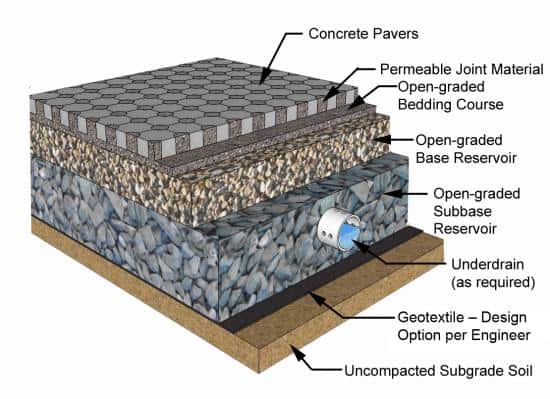
Systems that mimic and/or utilize nature’s more potent ability to absorb and redirect stormwater can help. Green infrastructure is any built system that supports these or other natural processes. Permeable pavement, green roofs, and bioswales are popular examples.

Most of us are familiar with green roofs, which utilize plants to cool down otherwise unused space on buildings. Terraced designs with planted balconies can accompany green roofs to reduce wind tunnel effects in dense urban developments and provide even more shade. Finally, shade canopies like the louvers in the photo at the top of this page perform similar functions.

Permeable pavement can replace concrete in some applications to increase “infiltration,” or soaking, of water into soils. Benefits include slowing the pace of stormwater runoff, and increasing water filtration.

cross section of permeable paver design with layers down to uncompacted soilPermeable paver design; (photo/Liangtai Lin via Flickr)

Bioswales, too, slow and filter stormwater. But they use plantings, root structure, and buried drainage systems to do it. Bioswales can replace common concrete drainage channels to function more like natural tributaries. The plants retain and decompact the soil, which allows efficient absorption of stormwater, and a buried, permeable drainpipe channels the runoff to a river or reservoir.

This engineering concept is called green stormwater infrastructure. And in areas like Central Texas, where flooding and droughts are both problems, it can remedy both.

This illustration from the Hill Country Alliance below describes how our natural and built systems can work together.

In our limestone karst geology, underground aquifers store groundwater. Rainwater fills them by “infiltrating,” or soaking into, the soil, then filtering through the porous rock below.

The left side of the diagram represents our rangelands. The soil in these high plateaus absorbs some stormwater, and the rest drains down to rivers like the Pedernales and the Colorado.

Cities like Austin then build infrastructure to direct and divert it, like the reservoir on the right side of the diagram.

The aquifer can refill through seepage, but compacted soils and impervious ground cover increase runoff and restrict infiltration. That makes recharge zones highly important, as the center of the illustration shows.

Dense native plants in these areas decompact the soil as roots grow downward toward the aquifer below. So when rain falls or drains into the area, it filters underground more directly.

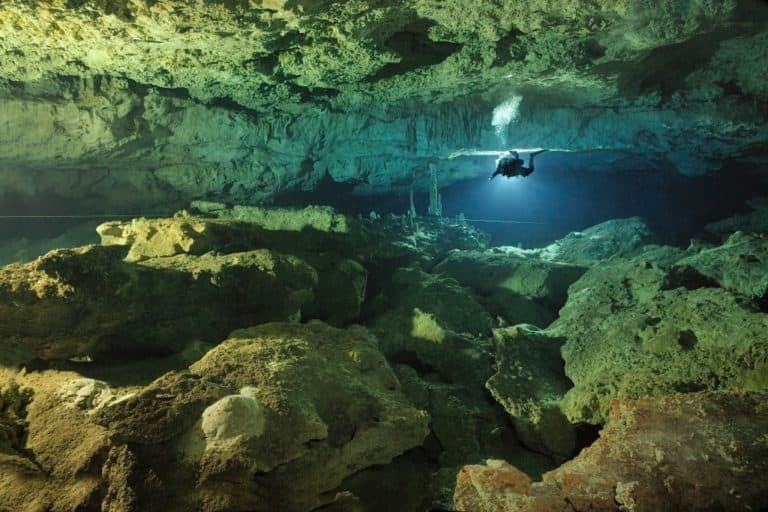
A diver in a karst aquifer; (photo/International Year of Caves and Karst)

OK, But Why Does it Matter?

Imagine cities in our area engineered toward aquifer recharge. Green roofs and terraced buildings cool impervious surfaces and reduce Structures like bioswales and permeable pavement loosen the concrete-and-steel grids that compact soils and shed water quickly.

Direct results include healthy, absorbent soils with stronger plant and wildlife communities. Benefits cascade from there.

Aquifers recharge faster and more regularly. It’s hard to overstate the upside of this function, but easy to illustrate it with one statistic: 55% of all Texas water comes from aquifers (as of 2019).

Beyond that, trees and understory plants thrive, collecting CO2 and cooling off the surrounding surfaces. These green areas also support pollinators and pest predators, like spiders and bats. Humans enjoy the boost in mental and emotional well-being that proximity to nature brings, which is well-documented.

Most vitally, green infrastructure makes our communities resilient rather than vulnerable to extreme weather. Areas with healthier soils and better drainage will withstand floods better. Shadier surfaces add comfort in extreme heat and help reduce convection in heat islands. And a bigger underground water supply can provide security during severe droughts.

Examples at scale exist increasingly, all over the world.

Large-scale opportunities to completely replace concrete structures with natural solutions exist, too. One such strategy is natural streambank stabilization of waterways that function as drainage.

Streambank stabilization almost always requires some infrastructure. Populated areas change these waterways, often increasing water load and associated erosion.

The gray infrastructure method is to turn them into concrete troughs. But green methods like elevated soil lift (ESL) construction and selective planting can also stabilize these channels’ banks. Like concrete, this solution provides critical water diversion. But it creates absorption and wildlife habitat that concrete does not.

Not only that, but because it is alive, an engineered, planted streambank will strengthen over time rather than weaken. In fact, this is the case in all green infrastructure with proper implementation and plant selection.

While gray infrastructure still has viable applications for the foreseeable future, green infrastructure can help conserve the natural resources that will protect that future.

Public funding for conservation in Texas over the last three decades adds up to $2.2 billion. Studies have shown that every $1 invested in conservation returns $4 to $11 in ecosystem services like clean air and water and reduced flood risk. And every $1 invested in land conservation for water protection helps avoid $6 in water infrastructure costs.

“Nature-based solutions can be part of the solution,” the Environmental and Energy Study Institute said. “They have a smaller carbon footprint than gray infrastructure and usually sequester carbon — plus they literally grow over time!”

Top 5 Affordable Landscape Ideas For Fall

A Client’s Guide to Landscaping Costs

Landscaping cost averages are all over the map. Maas Verde wants to make pricing more transparent.

What is Ecological Landscaping?

Ecological landscaping seeks to implement a vision of human-designed outdoor spaces that integrate into natural processes.

How to Compost Leaves in Your Yard

If you know how to compost leaves, you can harvest a free source of nutrients and soil benefits for any yard or garden.

What is Ecological Landscape Maintenance?

Ecological landscape maintenance is completely different from mow and blow, and far less costly to clients. Learn more here.